


As funds flow into the hands of charities, an unsettling question arises: is your donation inadvertently fueling money laundering activities? While charitable giving supports legitimate causes, criminals exploit the trust attached to non-profit organisations (NPOs) to move and legitimise illicit proceeds. What can be done to stop them, and what do current FATF standards and EU rules require from banks, regulators and the sector itself?
Charities embody compassion and solidarity. That public trust is precisely what makes them attractive as a front: donations look legitimate, cross-border transfers are common, and urgent appeals (disasters, conflict, humanitarian crises) reduce the time available for controls.
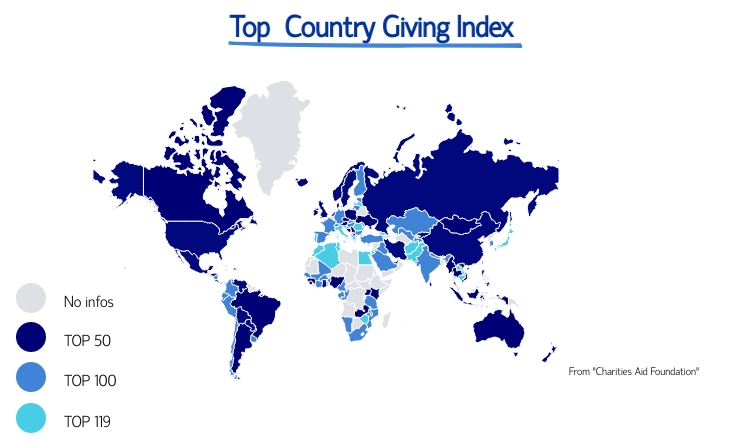
The growth of international aid and online fundraising has expanded the attack surface. Criminals infiltrate donation channels, damage reputations and divert resources away from beneficiaries. Online crowdfunding has added new fraud patterns, as illustrated by reported scams against generosity platforms. Without investigation by financial institutions or law enforcement, the illicit origin of funds often remains concealed.

Methods evolve continuously. Typologies documented by the OECD and, more recently, by the FATF remain the operational baseline for banks and supervisors assessing NPO-related risk. For the link between NPOs and terrorist financing, see also our article on how terrorism is financed.
How are charities used for money laundering?
Tax incentives for donations create both a legitimate policy tool and an abuse opportunity. According to an OECD report on the abuse of charities for money laundering and tax evasion, the most common methods include:
An organisation registered as VAT-exempt that carries out taxable activities
Issuing receipts for payments that are not actual donations
Issuing receipts to people working for the beneficiary organisation
Terrorist financing schemes that use charities to raise or transfer funds
Misappropriation of funds collected for personal use
Manipulating the value of donated goods
These typologies should be read together with the current FATF framework (Recommendation 8 and related guidance), not as a substitute for it. They remain useful red-flag checklists for transaction monitoring and for trustees reviewing unusual fundraising or disbursement patterns.
A dated historical illustration is the Vatican Bank / Banco Ambrosiano scandal of 1982-1984: opaque transfers and missing funds triggered reforms ordered under Pope John Paul II. Treat it as a transparency lesson from the 1980s, not as the primary modern illustration of NPO abuse.
What is the link between charities and terrorism?
The FATF has long documented terrorist abuse of NPOs. Its work on terrorist abuse of non-profits shows how groups exploit the credibility of charities, especially small or newly created organisations operating in conflict zones with limited legal and financial capacity. NPOs in those contexts can become conduits for raising or moving funds while escaping suspicion. Complementary reading: FATF, Risk of Terrorist Abuse in Non-Profit Organisations.
FATF Recommendation 8 (2023) and what changed for NPOs
On 16 November 2023 the FATF adopted a revised Recommendation 8. The standard requires countries to apply a focused, proportionate and risk-based approach to protect NPOs from terrorist financing abuse, instead of applying identical controls to every organisation in the sector. Key clarifications for compliance teams:
NPOs are not, as a category, obliged entities that must conduct customer due diligence (CDD) on donors or beneficiaries in the same way as banks or gatekeepers under the EU AMLR.
The language shifts from blanket "supervision" of the NPO sector toward oversight and monitoring calibrated to identified risk.
The November 2023 Best Practices Paper on combating the abuse of non-profit organisations illustrates good and bad practice for both governments and NPOs, including examples where heavy-handed measures disrupted legitimate humanitarian work.
For banks, the practical implication is not to treat every charity account as high risk by default. Segment the portfolio: low-risk domestic NPOs with transparent governance can justify simplified measures, while NPOs operating in high-risk jurisdictions, using cash-intensive or informal transfer methods, or showing weak trustee oversight warrant enhanced review.
The FATF documents unintended consequences of AML/CFT measures on NPOs (including de-risking). In June 2025 it agreed procedures so that misapplication of the standards against civil society can be flagged in the assessment process. Separately, the February 2025 revision of Recommendation 1 requires countries to allow and encourage simplified measures in lower-risk scenarios. Applied to NPOs, that means low-risk organisations should not face the same intensity of controls as high-risk ones; blanket bank de-risking can push legitimate charities toward informal channels and increase risk.
Under Regulation (EU) 2024/1624 (AMLR), applicable from 10 July 2027, charities are not listed as such among the obliged entities in Article 3. Confusion with professions that are obliged (lawyers, notaries, accountants, real estate agents and other gatekeepers) should be avoided: the AMLR package is explained in our AML Package 2024-2026 overview. Charities may still appear in bank CDD files as customers; that does not turn them into gatekeepers under Article 3.
How do charities benefit criminals and money launderers?
Organised crime continues to misuse legitimate structures. Europol and other agencies have long noted that criminal groups use legal corporate vehicles to conceal activities and launder capital; charities and social organisations can play a similar role when controls are weak. The same advantages that make charities effective for public good also help conceal illicit capital:
Appearance of legitimacy: transactions in the name of a charity borrow public trust and reduce scrutiny from banks, donors and authorities.
Anonymity: online platforms can allow donations with limited identification until an investigation starts.
Property transactions: assets bought with illicit funds may be donated to or held through a charity, then sold or rented to further launder proceeds (see also real estate and money laundering).
Opaque fund flows: international grants, multiple cash collections and cross-border partnerships create complex trails that are harder to reconstruct after the fact.
Tax benefits: overstated donation amounts can combine tax abuse with laundering of illicit income.
Recent supervisory practice shows why oversight matters. In January 2025 the Charity Commission for England and Wales opened a statutory inquiry into the Iraqi Welfare Association after identifying high-risk fund transfers, including use of a hawala channel and a director's personal bank account for charity payments. In May 2025 the same regulator opened a statutory class inquiry after HMRC found that 105 charities had cashed cheques totalling 22 million pounds with a company between December 2021 and March 2023. These are regulatory investigations, not convictions; they illustrate the red flags banks and trustees should escalate.
How to prevent the misuse of charities
FATF guidance for NPOs remains organised around a risk-based cycle. The November 2023 Best Practices Paper updates earlier material and still supports a three-step approach:
1. Risk analysis. Apply a risk-based approach. Concentrate resources on higher-risk partners, geographies and transfer methods. New partners and crisis zones require deeper scrutiny.
2. Risk mitigation. Sound governance and financial management: segregation of duties, dual authorisation, due diligence on incoming and outgoing funds, and documented decisions. There is no single KYC checklist for every NPO; intensity should follow risk. For corporate counterparties and beneficial owners, banks and obliged entities still apply KYC on companies. Charities should avoid operating where state authority is so weak that informal or extremist networks dominate payment channels.

In unstable contexts, map political and security risks and how diversion could occur. Prefer regulated banking channels where available; informal value transfer increases both operational and AML/CFT risk.
3. Self-regulation and sector integrity. Representative bodies and independent checks (accounts, governance, fundraising claims) help protect the sector's reputation. Training for trustees and staff on AML/CFT basics is covered in our AML Fundamentals learning path.


Crisis moments remain high risk. After the 2023 earthquakes in Turkey, urgent fundraising coincided with fake social-media appeals, fictitious aid companies and asset purchases used to place illicit funds while authorities focused on emergency response. In that environment, both genuine NPOs and criminals compete for attention and bank rails; monitoring capacity is stretched precisely when volumes spike.
Why compliance still matters for charities and their banks
Charities are essential and mostly legitimate. A minority of abuse cases, and over-restrictive bank de-risking, can both harm the sector and the people it serves. International donation chains also create information gaps between originator banks, intermediary institutions and local disbursement channels.
The practical response is proportionate controls: risk-based oversight of NPOs under Recommendation 8, simplified diligence for low-risk organisations under Recommendation 1, documented escalation when hawala-style transfers or personal accounts appear in charity flows, and clear AMLR boundaries so charities are not treated as gatekeepers. Transparency and cooperation between NPOs, banks and supervisors protect donors and beneficiaries without freezing legitimate aid.