

In May 2015, the biggest scandal in football history (known as “FIFA Gate”) led to seven FIFA executives being arrested in Zurich. The accusations focused on the use of bribery, fraud, and money laundering to rig the $150 million media and marketing rights auction for FIFA games in the Americas, which included at least $110 million in bribes from different sources.
This is one of the several cases of money laundering through football. To understand why this sport is especially prone to money laundering and how it works, we need to answer a few questions.
Why is football an attractive target for money laundering?

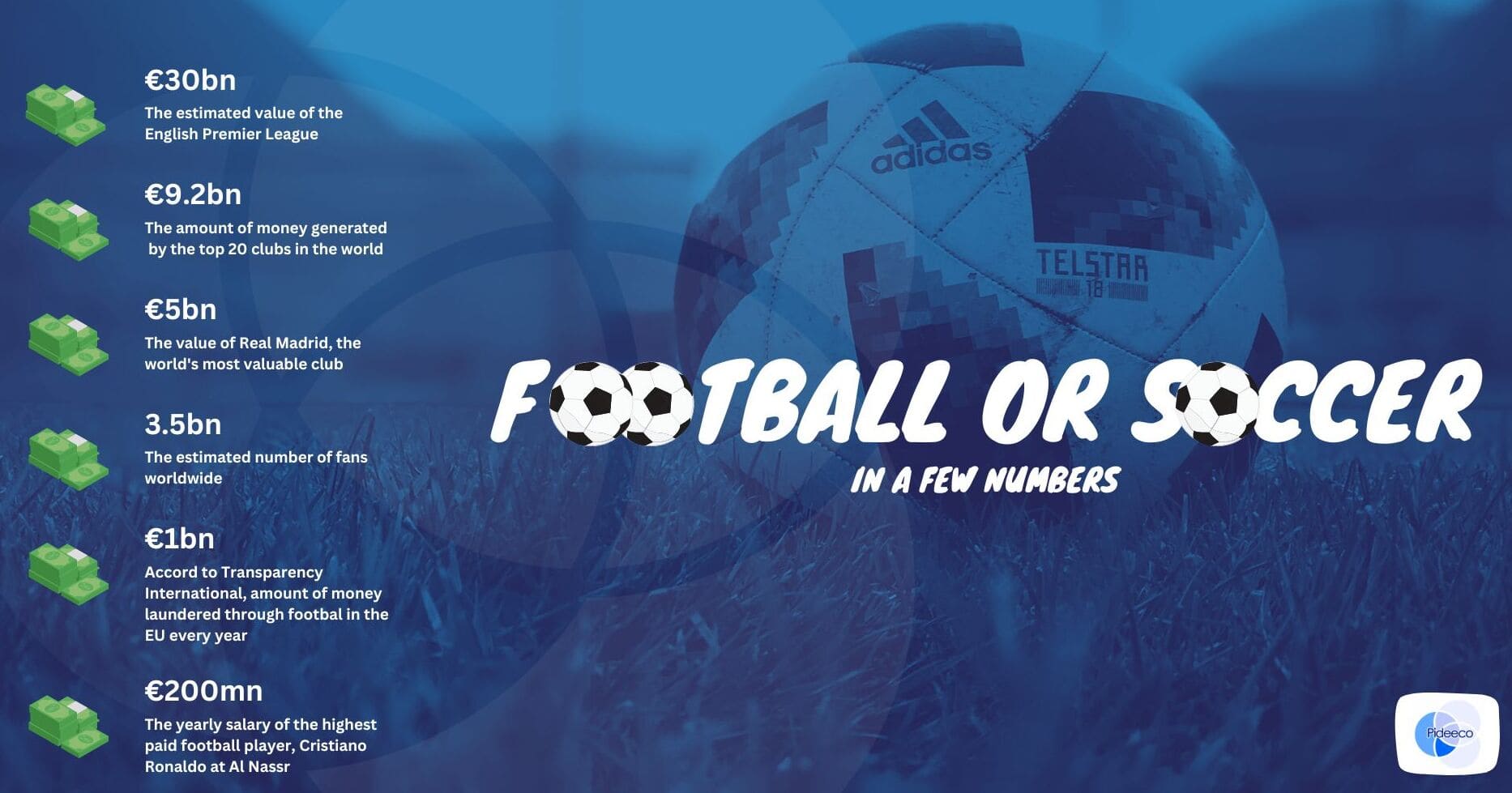
As the FATF report "Money Laundering through the Football Sector" emphasizes, football is the ideal candidate for money laundering among sports, simply because it is the most popular in the world, with 250 million players, 38 million registered players, and 5 million officials and referees. Around 1 billion people watched the World Cup alone, making it the most watched sports competition in the entire globe.
As a result, it is a very profitable industry that gets funding from a variety of sources. Due to the lack of reinforced international anti-money laundering regulations in the sports sector, some investors with less-than-legitimate backgrounds have been able to fund football clubs, frequently with the intention of becoming well-known and forming relationships with players. Clubs are reluctant to reveal any alleged money laundering activities since doing so could harm the sport's reputation. Money laundering is simpler to do in this industry due to the high cash flows and minimal entrance barriers.
An estimated $140 billion is laundered through football each year according to the United Nations Office on drugs and Crime.
How have football clubs been used to launder money?
Criminals exploit football in various ways to launder their illicit funds:
Overvaluing players during trades: in 2013, Brazilian football star Neymar was transferred from Santos to Barcelona for a reported fee of €57.1 million. However, it was later revealed that the true value of the transfer was much higher, with some estimates putting it at over €80 million. The transfer was investigated for possible money laundering and tax fraud. Fc Barcelona and Santos received multiple fines and the case is still ongoing to this day.
Player image rights: player image rights can be a legitimate source of income in football, they can also be vulnerable to abuse for money laundering and other financial crimes. A case involving money laundering and player image rights in football is the "Football Leaks" scandal. This involved the release of confidential documents relating to the business dealings of several major football clubs and players, including details of tax avoidance and money laundering through image rights.
Agents fees: through inflated fees, more complex schemes due to their influence, and connections within football clubs, agent fees play a significant role in money laundering. Mino Raiola received a fee of about €49 million for his involvement in the transfer of Paul Pogba from Juventus to Manchester United in 2016. This amount was reportedly the biggest ever paid to an agent in a football transfer. The payment was thought to be significantly out of proportion to the job that Raiola completed, which led to concerns about possible money laundering.
Purchase and sale of football clubs: one example is the case of Leeds United which was purchased by the controversial businessman Massimo Cellino in 2014. Cellino had a history of legal problems and was later convicted of tax evasion in Italy. He was also accused of using the club to launder money and evade taxes.
Sale of fake tickets: on 26 May 2018, the UEFA Champions League final was played between Liverpool and Real Madrid. It was reported that thousands of fans were affected by the sale of fake tickets sold at inflated prices. Fans who had paid for these fake tickets were turned away at the stadium entrances and were unable to attend the match. The profits from these sales were believed to have been laundered through a network of shell companies and offshore accounts.
What are the consequences of money laundering in football?
Money laundering in football has several repercussions. It may compromise football's reputation for fair play. This is because it's possible that the money being used to pay for match-fixing and corruption comes from illegal enterprises like drug trafficking or organized crime. As a result, football's reputation may suffer and the trust of fans for the game may decline.
120M€ are the estimated annual proceeds from betting-related match-fixing.
Teams may also suffer large financial losses from money laundering. For instance, a club may be subject to fines, penalties, and other monetary consequences if it is discovered that it engaged in money laundering. Also, supporters may be less likely to watch games or buy products if they lose faith in the sport, which might be detrimental to the financial health of football clubs and leagues.

The consequences of money laundering in football can even extend beyond the sport itself and have a negative impact on society. For example, money laundering can help fund other illegal activities, such as human trafficking, terrorism, and drug trafficking, which can harm communities and individuals.
The AMLR and football: 10 July 2029
The 2024 package replaces the 5th AML directive as the sector compass: Regulation (EU) 2024/1624 (AMLR), Directive (EU) 2024/1640 (AMLD6) and Regulation (EU) 2024/1620 (AMLA). The general application date is 10 July 2027; for professional clubs and football agents, Article 3 AMLR applies on 10 July 2029. This is no longer a directive to transpose: the regulation is directly applicable. Supervision of clubs and agents stays national; AMLA (Frankfurt) does not take them into direct supervision. See the AML package / AMLR.
For clubs, four transaction families fall in scope: investors, sponsors / advertisers, agents / intermediaries, player transfers. A small-club exemption is possible (turnover below EUR 5,000,000 over two financial years, demonstrated low risk; lower divisions under conditions). Agents have no size exemption. The five typologies above (overvalued transfers, image rights, agent fees, club sales, fake tickets) map onto those families: transfers and image-rights deals sit with player transactions; agent fees with intermediaries; club sales with investors; ticketing and shirt deals often sit with sponsors. The FATF 2009 report on the football sector remains the typological reference.
That mapping is the operational point for banks and other obliged entities that already serve clubs today. From 2029 the club or agent becomes an obliged entity in its own right, but the same red flags (price far from sporting value, circular fees, opaque buyers, cash-heavy ticketing) already require CDD now. Waiting for 2029 is not a defence for a 2026 onboarding.
How are football organizations working to combat money laundering?
FIFA and UEFA set licensing, agent and transfer rules. FIFA created the « For the Good of The Game » group in November 2005 (EWS betting alerts, club licensing, agents regulations, Transfer Matching System, transfer clearing house). In France, the DNCG oversees club accounts. UEFA monitors the 53 associations through a betting fraud-detection system, and the Club Financial Control Body applies financial-sustainability rules (football earnings / squad cost). Those sporting rules do not replace the 2029 AMLR duties.
Organisations also work with law enforcement (information-sharing, joint investigations), can fine, suspend or expel clubs and individuals, and run awareness programmes on AML rules, financial monitoring and sponsor due diligence. Useful, but secondary to the 2029 obliged-entity regime.
World Cups 2026 and 2030
The 2026 World Cup (United States, Canada, Mexico) expands to 48 teams and 104 matches. 2030 is hosted mainly by Spain, Portugal and Morocco, with centenary matches in Argentina, Uruguay and Paraguay. Flows, sponsors, media rights and betting: money-laundering and match-manipulation risk scale with the tournament. Obliged entities that touch those flows (banks, agents, European clubs) should prepare for 2029 rather than wait for kick-off.
What is the future of money laundering in football?
Football needs governance, financial transparency and owner scrutiny. The measures often listed (including by Transparency International) still help: identity checks on owners, directors and key staff; an independent accountant on source of wealth; PEP databases for international investors; information-sharing with football and law-enforcement authorities; verified adverse media searches; a whistleblowing channel; integrity checks, including meeting the buyer. Add a beneficial-ownership register and stronger sponsor CDD, aligned with company KYC.
Without transparency, corruption risk in clubs stays high. A stricter AML strategy, especially after AMLR 2029, can deter some schemes. The point is that only fit and proper persons own and run clubs.